7.3.2025
What does the future hold for shopping centres?
OPINION / This open letter is signed by Jessy Desjardins, Vice President of Development at Brigil.
Half-empty and inherited from another century, shopping centres today raise a crucial question for our cities: what should we do with these vast spaces designed for a bygone era?
Born in the 1950s, these temples of consumption were fueled by the post-World War II boom in automobile use. People would arrive by car, spend the day there, and leave without ever setting foot on a main street. These spaces consumed the life of our downtown cores with shiny, functional boxes often disconnected from the urban fabric—places that replaced what are known as third places. As the band Les Colocs aptly put it: “A bomb fell on the main street the day they built the shopping centre.”
The rise of shopping centres led to the loss of third places—those spaces between home and work where we can socialize: libraries, cafés, parks, a street bench, public squares. These places allow us to form connections and enrich the social fabric of our cities.
Today, that model is fading: storefronts are closing, parking lots are emptying, and communities are asking for something different. This situation, far from being a dead end, should be seen as an opportunity to correct past mistakes.
How to Begin This Transition
This is what we have started to do with Espace Canevas (formerly Place Cartier). Achieving this requires support from the city. After six years of collaboration, we are ready. Projects like this are complex and risky, requiring significant effort to come to fruition. They involve long-term lease complexities and varied construction phases.
We must develop these sites while creating a vibrant living environment that can be active even during construction.
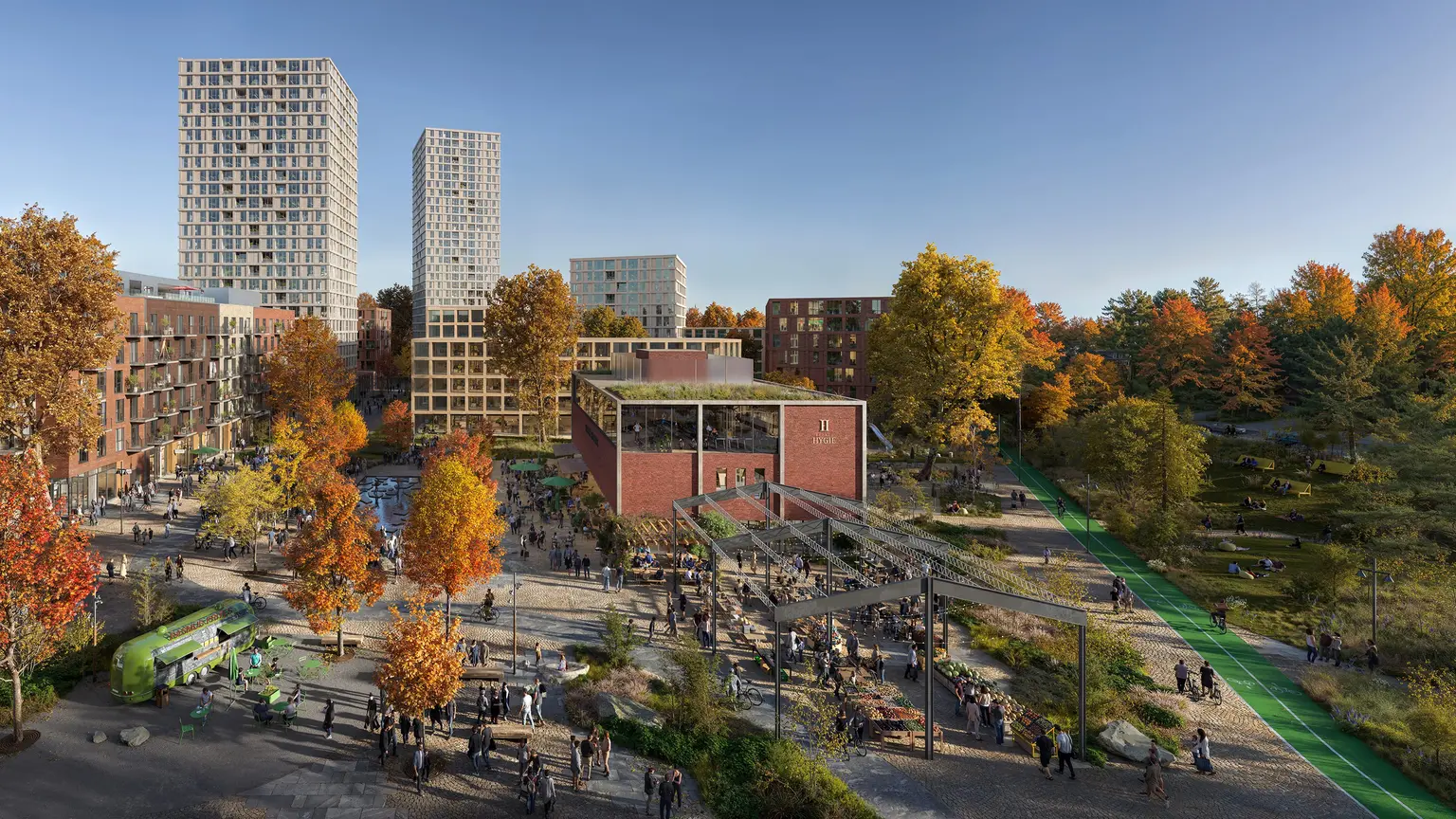
This project is not simply about recycling an old shopping centre. It is about transforming it into a true neighbourhood: an open, accessible, green space where local shops coexist with public areas, connected to the existing community—a place where people can live, work, create, and meet. A place where density is designed for humans, not cars.
We want to restore vitality to our streets, bringing walking, cycling, social encounters, and spontaneity back into daily life. We believe it is both possible and necessary to evolve these old infrastructures into sustainable, resilient, and deeply human models.
Engagement and Global Inspiration
We presented the Espace Canevas project to Gatineau’s Urban Planning Advisory Committee (CCU) on June 16, and to the community on June 26, with a documentary demonstrating our approach inspired by the best practices in the world, in collaboration with architects from Copenhagen recognized for their innovative, human-centered work.
To succeed, municipal support is essential. It is imperative that local elected officials adopt a proactive approach to realize Espace Canevas and accelerate the transformation of old shopping centres into fully functional, vibrant neighbourhoods.
Like many progressive cities, Gatineau has the opportunity to implement incentives that encourage this essential shift in the name of community life and the environment. Together, we can redefine urban space to be sustainable, lively, and human-centered. Let’s act now to revive our streets and foster social interactions that enrich the urban fabric.
Related News
Lorem ipsum dolor sit amet consectetur adipiscing elit. Praesent commodo nunc vitae justo fermentum, sed posuere sapien dignissim. Curabitur tempus, risus id viverra luctus, nunc elit blandit erat, sit amet finibus orci nisl non justo.
-3840x2400.webp)
4.20.2026
Ontario Expanding HST Rebate to Lower the Cost of New Homes in Partnership with the Federal Government

1.23.2026
Brigil Welcomes Curt Millar as Chief Financial Officer and Executive Vice President

11.5.2025
Since 1985, Brigil Has Been Making Home Ownership More Accessible and is Renewing its Mission

10.14.2025
A Community Manager: The Key to a More Connected and Engaging Experience in Luxury Rental Apartments