8.10.2025
Le Droit - The Columbia Farm, a Rare Witness of the Philemon Wright Period
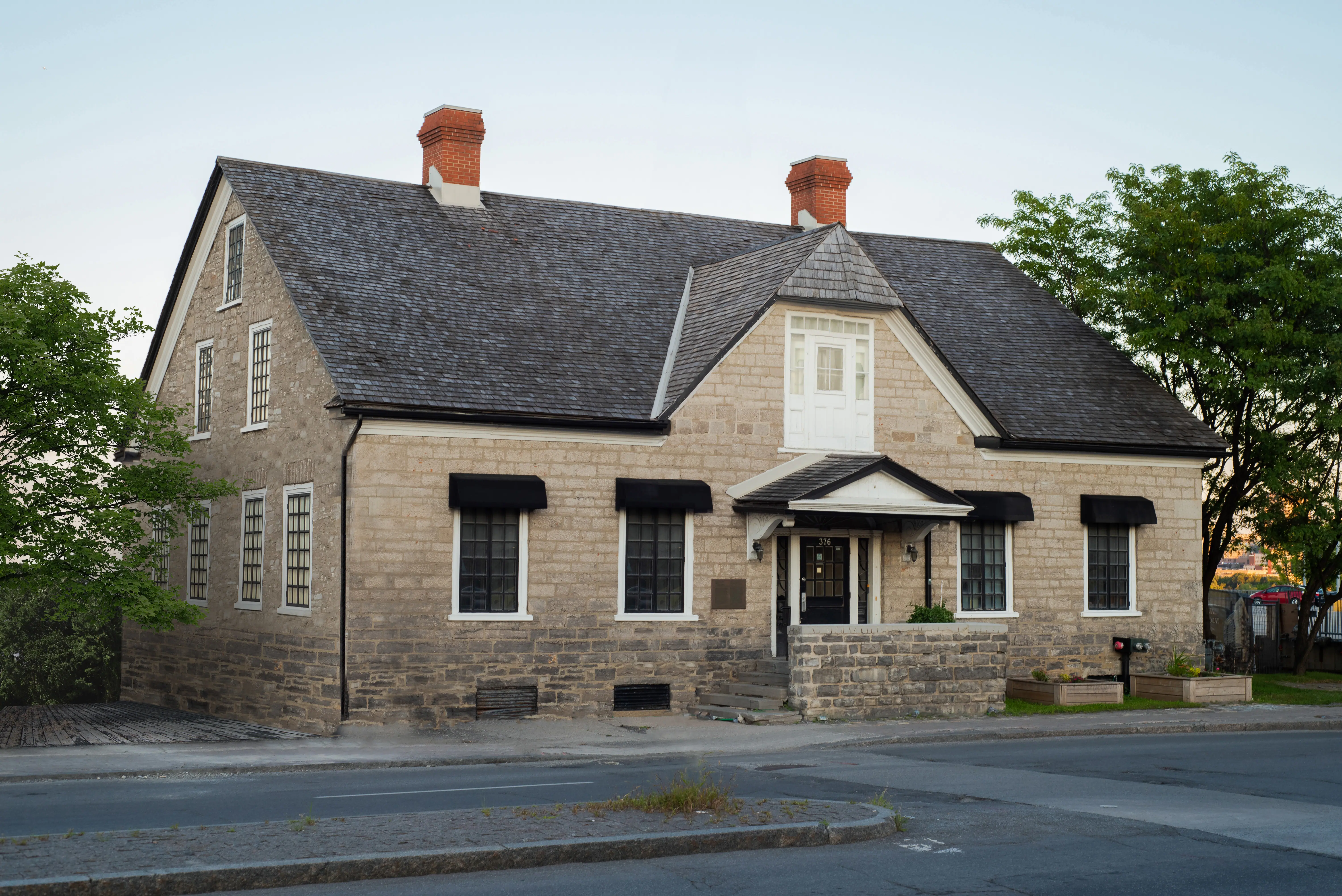
Built around 1835, the Columbia Farm House is one of the oldest buildings in Gatineau and, along with the Charron House in Jacques-Cartier Park, the only remaining structure in the Hull sector dating from the era of Philemon Wright (1760–1839), founder of the Township of Hull in 1800.
Shortly after the creation of the City of Gatineau in 2002, the Outaouais Historical Society identified this ancestral building as one of the ten heritage highlights of the Hull sector.
In addition, to formally recognize the importance of the historic structure and ensure its preservation for future generations, the former City of Hull designated the Columbia Farm House as a heritage property in 1988. The building is listed in the Quebec Cultural Heritage Register and was added in 2006 to the Canadian Register of Historic Places.
An Experimental Farm
Columbia Farm, one of Philemon Wright’s most significant properties, was managed by his son-in-law, entrepreneur Thomas Brigham, who married Abigail Wright in 1816. In 1839, the couple inherited both the residence and the farm.
Brigham was born in 1787 in Chelsea, Vermont, and died in Hull in 1842. He is considered the first pioneer of Chelsea, Quebec, where he settled in 1819 and built both a sawmill and a gristmill. Chelsea is celebrating its 150th anniversary this year.
Columbia Farm was considered experimental, as new livestock-raising and agricultural practices were tested there. Moreover, during the first half of the 19th century, this vast agricultural estate became one of the most prosperous in Lower Canada, present-day Quebec.
Significant Heritage Value
The Columbia Farm House is a fine stone-cut building with a rectangular plan and a gable roof featuring a front-facing pediment. Its value lies in its many heritage attributes.
In fact, it represents an excellent example of the most advanced form of the Georgian architectural style, also known as English Classicism, which was introduced to Lower Canada under the influence of Upper Canada (Ontario) and the United States.
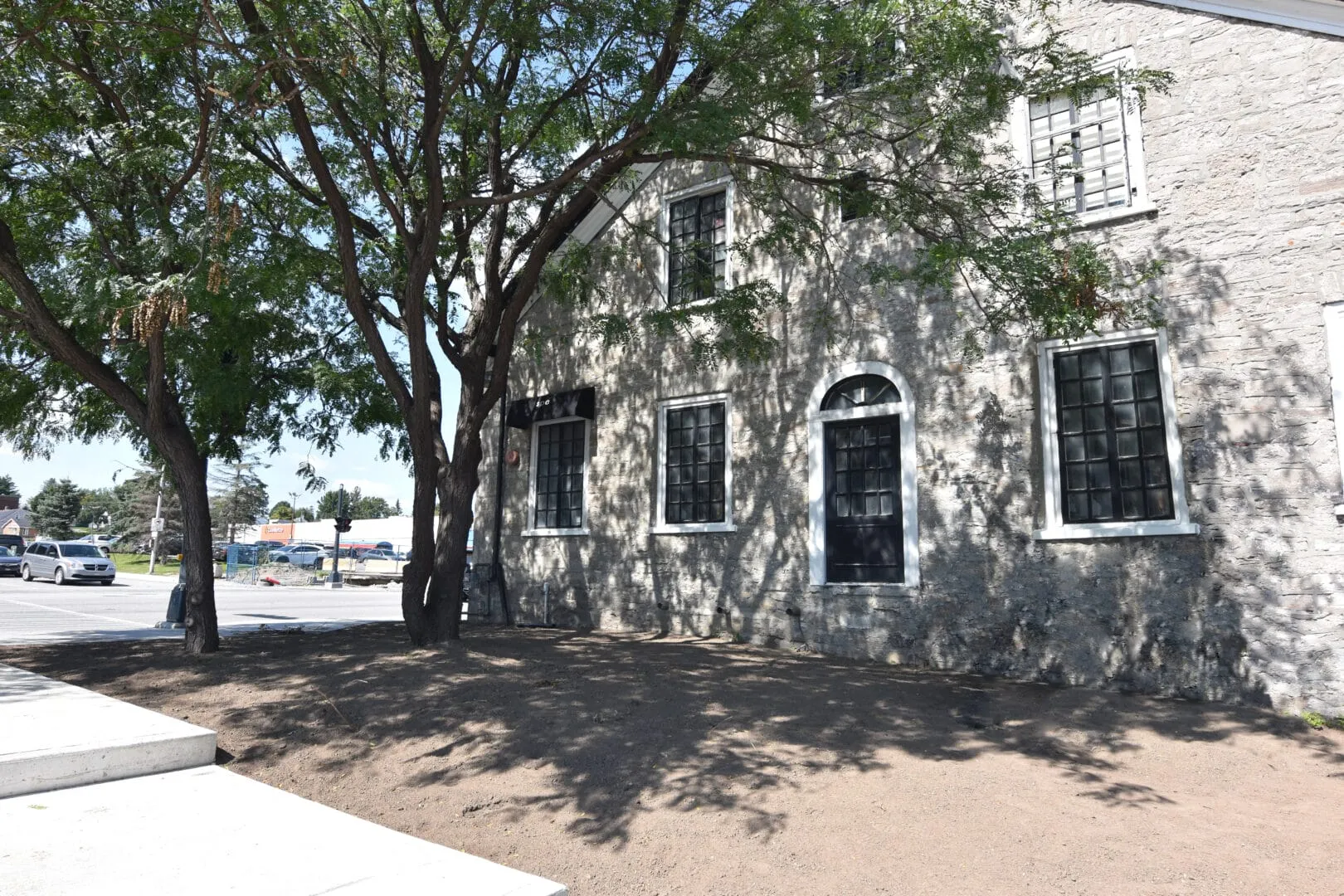
This architectural style is evident in the central doorway topped with a fanlight transom, as well as in the large casement windows with 24 small panes.
Originally, the façade faced south rather than Saint-Joseph Boulevard as it does today. From its elevated position, the bourgeois residence overlooked Columbia Farm. At the time, the family home stood farther from Saint-Joseph Boulevard—one of the city’s oldest streets—which was widened over the years.
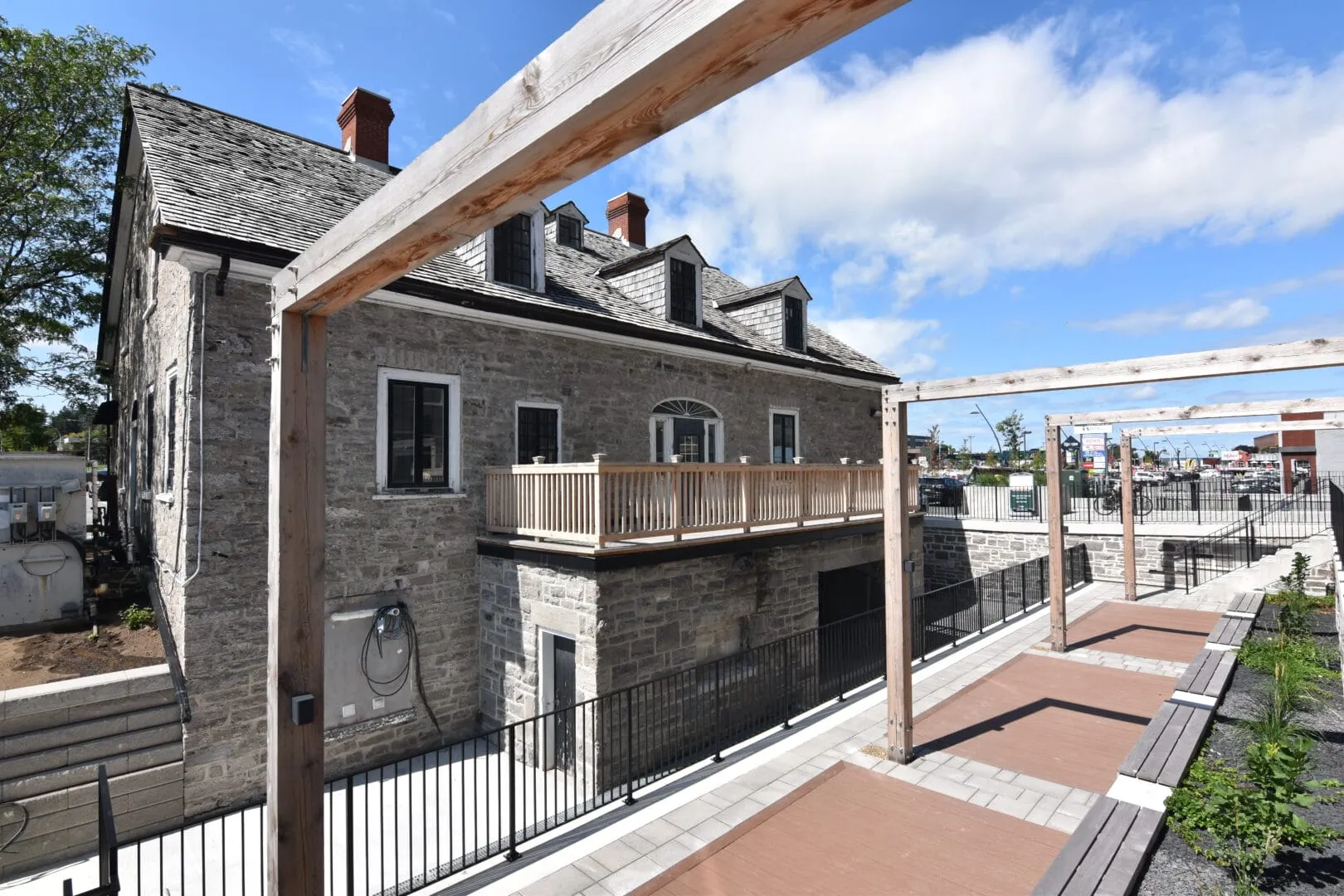
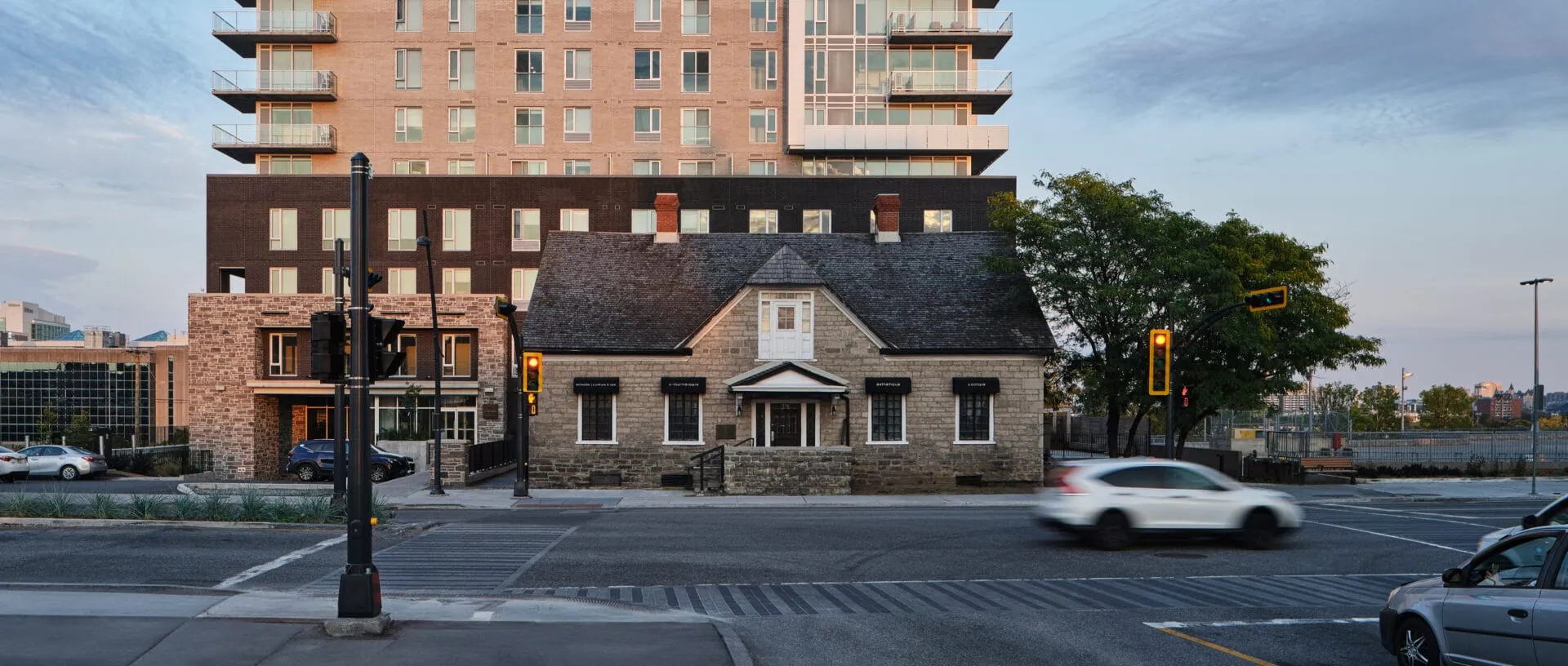
Finally, the one-and-a-half-storey elevation, the two large brick chimneys, the decorative elements—particularly the corner quoins—and the use of finely cut stone for the exterior cladding further enhance the building, which today is situated between two shopping centres: Galeries de Hull and Place Fleur-de-Lys.
New Uses Over Time
In the 19th century, the Columbia Farm House was surrounded by several other structures, including barns, a stone stable, and sheds. The property remained in the hands of the Wright–Brigham family until the turn of the 20th century. Subsequently, the Ottawa Golf Club purchased part of the estate, but resold it in 1904 to the International Portland Cement Company, which became Canada Cement Company five years later. The house then served as the residence for cement plant superintendents.
In 1947, the Canadian government expropriated several parcels of the former Philemon Wright estate, including the Columbia Farm House. The building remained vacant until 1964, when it was acquired by the National Capital Commission (NCC).
In 1970, a prestigious restaurant opened in the historic house and became one of the region’s finest dining establishments. It closed in 1988, the same year the NCC sold the building to a private owner.
Over the years, the building has housed a banking institution, an IT firm, and a hair salon. Since 2022, the house has been integrated into a 20-storey tower with 235 apartments developed by Brigil on the rear portion of the site and named Le Columbia, a tribute to the historic name of the location.
A Building Preserved for the Future
It is important to note that the nearly 200-year-old exterior of the Columbia Farm House cannot be altered in any way due to its designation as a heritage property under Quebec’s Cultural Heritage Act.
The building’s current appearance must therefore be preserved in order to continue bearing witness to the built heritage of Philemon Wright’s era and the early decades of Hull in the early 19th century.
Sources
Columbia Farm House, Quebec Cultural Heritage Register
Thomas Brigham, Quebec Cultural Heritage Register
Related News
Lorem ipsum dolor sit amet consectetur adipiscing elit. Praesent commodo nunc vitae justo fermentum, sed posuere sapien dignissim. Curabitur tempus, risus id viverra luctus, nunc elit blandit erat, sit amet finibus orci nisl non justo.
-3840x2400.webp)
4.20.2026
Ontario Expanding HST Rebate to Lower the Cost of New Homes in Partnership with the Federal Government

1.23.2026
Brigil Welcomes Curt Millar as Chief Financial Officer and Executive Vice President

11.5.2025
Since 1985, Brigil Has Been Making Home Ownership More Accessible and is Renewing its Mission

10.14.2025
A Community Manager: The Key to a More Connected and Engaging Experience in Luxury Rental Apartments